The AI Business Playbook: Let AI Run The Work, You Run The Business
Tracking, writing, list building, capturing visitors, email, pages, webinars, video, testing, automation, launches and proof. This is the exact system I run my own business on, chapter by chapter, in the order you should build it, with the tools I use at every step.
- 15 chapters
- 60 minute read
- 100% free, no opt-in
- Updated Nov 2026

The decisions are you.

Written by Kevin Fahey. I have been building online businesses for over twenty years, and today I run mine on WordPress plugins I built for myself. Everything in this playbook is how I actually work, every single week.
Most people think AI is about typing a clever prompt and getting rich overnight. It is not. AI is about leverage: doing the work of a small team without hiring one, and spending your own hours only on the few things that actually move the needle.
For twenty years, building an online business meant trading time for output. You wrote every email, built every page, chased every number by hand, and the business grew only as fast as you personally could work. That ceiling is gone. The people pulling ahead right now are not working longer. They have handed the repetitive work to systems and kept the judgment for themselves.
This playbook is that system. It is not theory and it is not a pile of apps. It is a way of working, taught in the order you should build it, from the mindset that makes it work to the 90-day plan that puts it all together. Each chapter teaches the method first. Then I show you the exact tool I use for that step, with a real screenshot and a demo you can watch right on the page.
You do not need to buy anything to use this guide. But at every step there is a tool that removes the friction, and it would be silly to teach you the method while hiding how I actually run it. Take what helps you. The thinking is yours to keep either way.

The Operator Mindset: Stop Doing, Start Directing
Before any tool, you need a shift in how you see your own job. For most of your career you have been the doer: the writer, the builder, the person who makes the thing. AI changes your role from doer to director. You set the direction, you judge the output, you make the calls. The machine does the volume.
Think of it like running a team. A good leader does not type every email themselves. They know what good looks like, they hand the first draft to someone capable, and they spend their energy on the decisions only they can make. That is exactly how you should treat AI: as a fast, tireless junior who needs clear direction and a final check.
What To Keep Human
Some things should never leave your hands, because they are the business:
- The offer: what you sell, to whom, and why it is worth the price.
- Real understanding of your audience: their fears, their words, their dream outcome.
- Taste and judgment: the final yes or no on anything that ships with your name on it.
- Relationships: partners, customers and the people who trust you enough to buy.
What To Hand To AI
Almost everything else is a draft or a chore, and drafts and chores are exactly what AI is for:
- First drafts of emails, pages, posts, scripts and webinar slides.
- Research: digging through a market, a competitor angle or a list of objections.
- Variations, summaries, rewrites, headlines, subject lines and formatting.
- Watching the numbers and telling you what changed, what is working and what to switch off.
- Answering the same customer question for the hundredth time, politely, at three in the morning.
AI writes the draft. You write the decision. Keep that line clear and everything else in this playbook gets easier.
What This Looks Like On A Normal Tuesday
- 90 minutes staring at a blank promo email
- An afternoon building one sales page
- Guessing which traffic source paid off
- Answering support tickets one by one
- Brief a trained bot, edit a strong draft in 15 minutes
- Describe the funnel in a sentence, refine the pages AI builds
- Read the AI's summary of what made money this week
- AI answers the routine questions, you handle the few that need you
That freed time is the whole point. Spend it on the things that compound: a better offer, a new partner, a deeper understanding of the people you serve. Those are the moves no machine will make for you.
The people who win with AI are not the ones who refuse to touch it, and they are not the ones who trust it blindly and publish whatever it spits out. They are the operators in the middle: they let AI do the heavy lifting and they put their own judgment on everything that ships. That is the stance this whole playbook is written from.
- Write down the five tasks that ate most of your time last week.
- Mark each one: decide (keep it), draft (AI writes, you edit) or chore (automate it).
- Pick one "draft" task and do it with AI this week. Time it against the old way.

Build The Foundation Before You Spend A Cent
Tool sprawl quietly drains small online businesses. The pattern is always the same: you buy twelve tools, you actually use three, you forget what you own, and you pay every month for software that does the same job twice. Every tool lives in its own little island with its own login, its own data and its own bill that grows as you grow.
A real stack is not a drawer full of logins. It is a connected system with one home base, where every tool you own reports to the same place and shares the same customer data. Get that base right first and every tool you add later slots straight in.
Own It Instead Of Renting It
Here is the decision that changes the maths of your whole business: where does your stuff live? When your list, your pages, your tracking and your customers live on somebody else's platform, you rent them. The rent goes up as you grow, the rules change when they decide, and leaving means starting again.
When they live on your own WordPress site, you own them. Growth does not raise the bill. Your data is in your database. Your tools can see each other, so a sale on one page can tag the buyer in your email list, show up in your stats and unlock their members area, all on its own.
The Order That Works
- One home base. Put your licences, updates and cross-tool stats on one screen.
- Take inventory. List what you already pay for, monthly and yearly, before you buy anything new.
- Replace rent with ownership. Each time a monthly bill renews, ask if you could own that job instead.
- Add tools only for bottlenecks. Buy a tool when you can name the exact problem it removes today.
Buy a tool to remove a bottleneck you can describe in one sentence. If you cannot name the problem it solves today, you are not ready for it yet.
- Open your bank statement and list every software bill, with its monthly cost.
- Circle the ones that charge more as your list or traffic grows.
- Install one home base so everything you add from now on reports to the same place.

See Everything: The Numbers That Actually Matter
You cannot grow what you cannot see. Most marketers know one number: roughly what came in this month. They do not know which offer produced it, which email did the work, or which traffic source paid for itself and which one quietly lost money.
That is how good money gets spent on the wrong things. A source that brings lots of clicks feels like it is working. Then you look at sales per source and find the quiet one with half the clicks made three times the money.
You do not need a wall of dashboards. You need a handful of numbers, watched honestly, and a habit of acting on them.
The Five Numbers I Watch
- Earnings per click, by source: what one visitor from each traffic source is worth. This tells you where to spend more and what to switch off.
- Opt-in rate per page: how many visitors join your list. Small gains here multiply everything downstream.
- Revenue per email: which emails sell and which just get opened.
- Repeat buyers: do people who buy once come back and buy again? This is the difference between a business and a treadmill.
- Lifetime value: what a customer is worth over time. Once you know it, you know exactly what you can afford to pay to get one.
Tag Everything At The Source
The secret to clean numbers is boring: every link you share gets its own tracking link, and every placement gets its own label. The email footer link, the YouTube description link and the Facebook post link all point at the same page, but each one is tracked separately. When a sale comes in, you know exactly which placement earned it.
Then review weekly, not hourly. The point of data is not to watch it twitch. The point is to make one or two better decisions every week: put more behind what works, and stop feeding what does not.
Let AI Read The Numbers For You
This is where AI quietly earns its keep. Instead of exporting spreadsheets, you ask: what changed this week, what is my best source, what should I stop? A good analyst bot reads your real numbers and answers in plain English, with the reason behind it. You make the call in minutes.
Decisions made on data beat decisions made on mood, every single time. The numbers are there to tell you where to point.
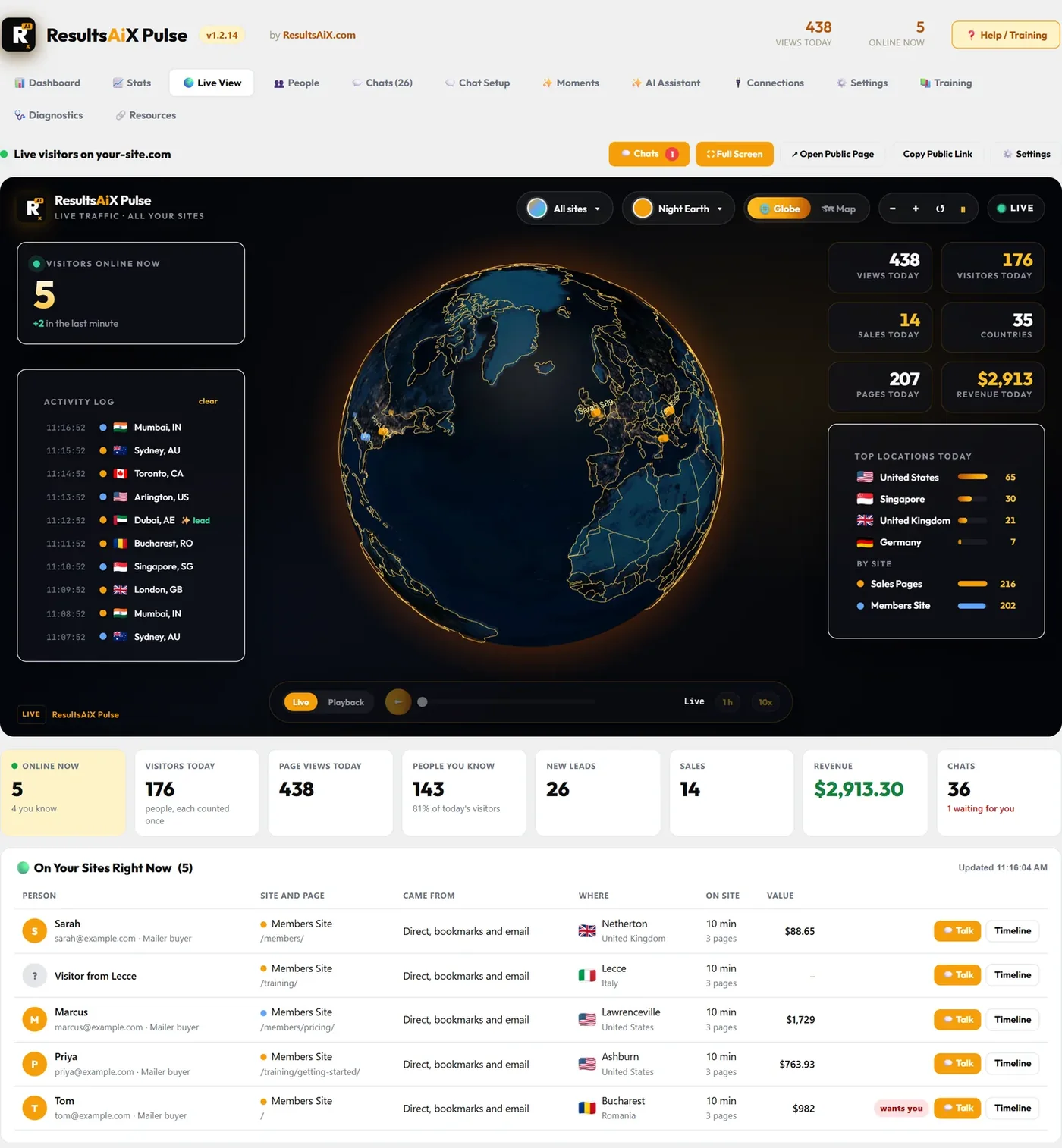
- Pick your three main traffic sources and give each one its own tracking link.
- Put a calendar reminder for a 20-minute numbers review every Monday.
- At that review, make one decision: more of something, or less of something.

Write Faster Without Sounding Like A Robot
Writing is where most people stall. The blank page eats the hours that should go to strategy and offers. AI removes the blank page entirely, but only if you use it properly. Most people open a general chat, type "write me a sales email", and get the same beige copy everybody else gets.
Brief It Like A Copywriter
The quality of what you get out is set by what you put in. Before you ask for a single word, give the AI what a good copywriter would demand:
- The offer: what it is, what it does, what it costs, what the buyer gets.
- The audience: who they are, what keeps them up at night, the exact words they use.
- The one job: this email gets the click, this page gets the sale, this post gets the comment.
- Your voice: paste two or three things you have written so it can match how you sound.
- The proof: real results, real numbers, real stories it can work from.
Use The Right Tool For The Job
A bot trained for sales pages beats a general chat for sales pages. A bot built for email sequences understands sequence structure. A research bot is built to dig. Task-specific tools give you better first drafts, which means less editing and more output.
The Editing Pass Is Where You Win
AI gets you to roughly 80 percent fast. The last 20 percent is you, and it is what makes your writing yours. Read it aloud. Cut the warm-up sentences. Swap any generic line for a specific one. Add one story only you could tell. Ten minutes of editing turns a decent draft into something that sounds like a person who knows their stuff.
Build A Library, Not A Pile
The smartest move is to stop writing emails one at a time. Every business needs the same set of emails: welcome, delivery, onboarding, upsell, win-back, renewal reminders and more, for every product. Map them once, fill the gaps with AI in your voice, and you will never again scramble to write a renewal email the night before it is needed.
AI removes the blank page. It does not remove your judgment. The draft is the AI. The decision is always you.
- Write a one-paragraph brief for your main offer: product, buyer, promise, proof.
- Save it. Paste it at the top of every AI writing session from now on.
- Draft one email with AI, then do a 10-minute editing pass out loud.

Build The One Asset You Truly Own: Your List
Every platform you build on can change its rules overnight. Followers are rented attention, and the landlord is an algorithm. Your email list is different. It is the one marketing asset you truly own, and it keeps paying you long after a post has scrolled away.
A list of people who chose to hear from you is a business you can switch on any day of the week. Launch something, send an email, and sales come in. That is why every chapter after this one, from capture to email to webinars, is built around growing and serving the list.
The Lead Magnet That Actually Converts
Forget the huge ebook nobody reads. A lead magnet that converts solves one specific problem, fast, and leads naturally to what you sell. Specific beats broad. Immediate beats impressive.
- Checklists and cheat sheets: one page, one result, used today.
- Short reports: the five ways to fix one problem your buyer has right now.
- Templates and swipe files: the thing they would otherwise build from scratch.
- Quizzes and surveys: people love learning about themselves, and every answer tells you what to sell them.
- Training: a free webinar or video series, which we will build in chapter nine.
The Simple Funnel
You need three pieces to start, and no more: an opt-in page that promises the one result, a download page that hands it over and points to the next step, and a short welcome sequence that gives real value before it ever makes an offer. That is it. Launch it, then improve it with real numbers.
Ask Questions, Then Listen
A survey is the most underrated list builder there is. Ask three or four quick questions, then send each person to the list, tag and page that fits their answers. You learn what your market wants in their own words, and every follow-up email lands on the right person.
Then Actually Talk To Them
A list you never email is a sleeping asset. Show up consistently, lead with something useful, and make your offers with confidence. People joined because they wanted what you have.
- Write down the one problem your buyers want solved this week.
- Pick the simplest magnet that solves it: a checklist, a report or a short video.
- Put up the opt-in page and the download page before you polish anything.

Capture The Traffic You Already Have
Almost nobody has a traffic problem. They have a capture problem. The visitor who reads your page, nods along and leaves cost you exactly the same as the visitor who joins your list. One of them you will never see again. The other you can email for years.
Before you spend another cent on traffic, fix the leak. Doubling the share of visitors who join your list does the same thing to your business as doubling your traffic, and it costs nothing to send.
The Right Message At The Right Moment
People do not dislike popups. They dislike being interrupted by something irrelevant three seconds after arriving. The same offer, shown to someone who has read most of the page, feels like help. Think in moments, not placements:
- Deep in an article: offer the deeper resource on that exact topic.
- Leaving a sales page: answer the last objection, or offer the free training instead.
- Third visit this week: they are clearly interested, so invite them to the next step.
- On a phone: a slim bar at the top beats a full-screen box every time.
Use The Whole Toolbox
A popup is only one shape. Sticky bars, slide-ins, side tabs, in-content boxes, chat-style callouts and two-step "yes or no" popups all have their moment. Mixing them across a page, without crowding it, is how one blog post turns into a steady stream of subscribers.
Respect The People Who Already Said Yes
The other half of capture is restraint. Cap how often a campaign shows. Never show the join offer to somebody who already joined. Show customers the next step, not the beginner pitch. Good targeting is mostly about who does not see something.
Test The Words
Run two headlines against each other on every important campaign. The winner is often not the one you would have picked, and a better headline on the same traffic is free growth forever.
Traffic you failed to capture is not neutral. You paid for it, in money or in hours, and you got one visit instead of a relationship.
- Open your most visited page and ask: what would a reader want next?
- Offer that, at the moment they have read enough to care.
- Set it to show once a week at most, and never to people already on your list.

Own The Sending, Not Just The List
Here is the part almost nobody thinks about until it bites. You can build a list of fifty thousand people and still not own your email. If your subscribers live inside somebody else's platform, you are renting access to your own audience, and the rent is calculated per subscriber.
Per-subscriber pricing is a strange deal. You do the work of growing the list, and your bill grows as a reward. It quietly changes your behaviour too. You start deleting quiet subscribers to save money, and you hesitate to import an old list because of what it will cost.
Your Database, Your Rules
When the list lives in your own WordPress database, the maths flips. Growth costs nothing extra. You keep everyone, you can segment on anything you have ever recorded about them, and you can export the whole thing whenever you like. Emails go out through a sending service you choose, which usually costs cents per thousand emails.
Follow-Up Is Where The Money Is
Most people send broadcasts and stop there. The real compounding happens in the automations:
- The welcome series that introduces you and delivers value while you sleep.
- The buyer branch that sends customers something different from browsers.
- The click tag that notices interest in a topic and follows up on exactly that.
- The quiet-subscriber check-in that wakes people up before they drift away.
- The renewal and upgrade emails that go out on time, every time.
Build each one once and it works every day. Write them the way you would write to one person, because that is how they are read.
Deliverability Is A Habit
Getting into the inbox comes from good habits: send to people who open and click, tidy up names so emails start with a real first name, remove bounces quickly, and warm older contacts up gently instead of blasting everyone at once. Good sending software makes those habits the default.
Your list is your business. Keep it somewhere growth makes you richer, not somewhere growth makes your bill bigger.
- Check what your email bill would be at twice your current list size.
- Write a 3-email welcome series: hello and story, your best free resource, your best offer.
- Set it to run automatically for every new subscriber.

Pages And Funnels In Minutes, Not Weeks
Every idea in your business needs pages: an opt-in page, a sales page, a webinar registration page, a download page, a thank-you page. For years that meant a designer, a developer or a weekend lost inside a page builder. Today you can describe the funnel in a sentence and have every page built for you, ready to refine.
Start From The Funnel, Not The Page
Do not think "I need a sales page". Think "what journey does this buyer take?" A free gift funnel is opt-in, download, offer. A low price offer funnel is sales page, checkout, upsell, thank you. A webinar funnel is registration, confirmation, the room and a replay. Pick the journey first, and the pages follow.
The Anatomy Of A Page That Sells
- A headline that names the outcome the buyer wants, in their words.
- A short story or problem that makes them feel understood.
- The offer, shown clearly: what it is, what they get, how it works.
- Proof: screenshots, results and real reviews.
- One clear action, repeated, with a guarantee next to it.
Your Site Is Your Shop Window
Your pages sit inside a website, and the website itself sells. A fast theme with clean layouts, a members area and AI help on every edit screen means your blog, your sales pages and your customer area all look like one business.
Ship the funnel this week and improve it with real visitors. A live page beats a perfect page that is still in your head.
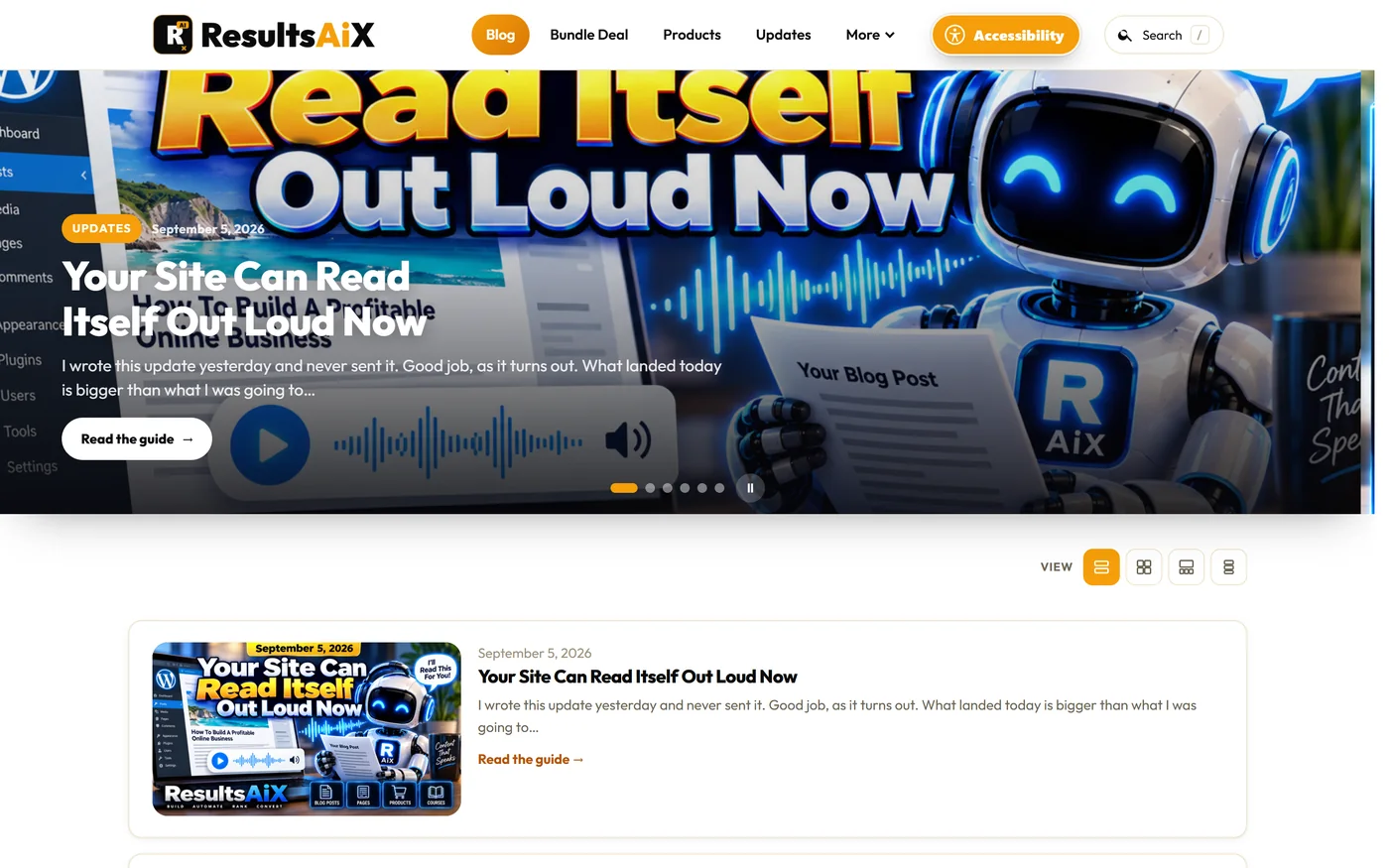
The ResultsAiX Theme runs my blog and members area: Create With AI on every edit screen, 4 layouts, 10 colour schemes, built-in SEO and lead capture, and a members area with no membership plugin needed. In the Bundle.
- Write one sentence: who the funnel is for, what they get, and what you sell at the end.
- Choose the journey: free gift, low price offer, webinar or challenge.
- Build the pages, change the words to sound like you, and publish.

Sell On Autopilot With Webinars
A webinar is the closest thing to a salesperson who never sleeps. In one session, a stranger gets to know you, sees the problem clearly, watches the solution work and gets a reason to buy today. Nothing else online does all four at once.
The catch used to be the work: slides, scripts, hosting, reminders, replays and follow-up emails, every single time. That is exactly the kind of work AI and automation now take off your plate.
Record Once, Sell Every Day
An automated webinar plays your best presentation on a schedule, as if it were live, every day or every hour. The registration page fills it, reminders bring people in, the chat answers questions, a timed offer appears at the right moment, and the replay catches everyone who missed it. You present once. It sells for months.
The Shape Of A Webinar That Sells
- The promise: one big result they will learn how to get.
- Your story: why you, and how you found the better way.
- Three teaching points that each break one false belief.
- The offer: everything they get, shown on screen, with the bonus and the deadline.
- Questions: answer the real objections, then make the offer again.
The Follow-Up Is Half The Sale
Many webinar sales happen in the days after, not during. A short sequence for attendees, another for those who registered but missed it, and a final reminder before the offer closes will often match the sales made in the room.
A webinar gives people the time to trust you. An automated webinar gives every new subscriber that same chance, every day, without you in the room.
- Write the one-sentence promise of your webinar.
- List three beliefs that stop people buying, and one story that breaks each.
- Record it once, then schedule it to play automatically.

Get On Camera Without Getting On Camera
Video sells. Sales videos, YouTube explainers, short clips for Reels and Shorts, product demos: they all convert better than text alone. And most people still avoid making them, because of the camera, the voice, the editing and the hours.
AI changes that completely. You can write a script, clone your own voice from a couple of minutes of samples, and turn the script into a finished video with slides, in the format each platform wants. Your voice, your message, no filming day.
Script First, Always
Every good video starts as good writing. Open with the outcome, not with hello. Show the problem in one sentence. Show the solution working. Give one clear next step. Keep sentences short, because they will be spoken.
One Script, Every Format
The same script becomes a widescreen video for your sales page and YouTube, and a vertical one for Reels, Shorts and TikTok. Make it once and publish it everywhere your buyers spend time.
Audio Counts Too
A podcast puts your voice in people's ears on the commute, at the gym and on a walk. It is the most personal media there is. A private podcast for customers or members, or a public show that feeds your list, builds trust faster than almost anything else.
People buy from people they feel they know. Video and audio let them hear you, even when you never sat in front of a camera.
- Take your best-performing email and turn it into a 60-second script.
- Make it once in widescreen and once in vertical.
- Put the widescreen one on your sales page and the vertical one on social.

Test, Do Not Guess: Let The Money Pick The Winner
Every page you have is a guess. The headline, the price, the button, the order of the sections: someone decided, and most of the time nobody checked. Split testing replaces those guesses with answers. Half your visitors see version A, half see version B, and the one that makes more money wins.
Test The Big Things First
- The headline: the single biggest lever on most pages.
- The offer and price: sometimes a higher price sells more, and you only find out by testing.
- The first screen: what people see before they scroll decides whether they scroll.
- The call to action: the words on the button and what happens next.
Judge By Revenue, Not Clicks
A version that gets more clicks but fewer sales is a loser that looks like a winner. Pick winners by money made, after refunds, and wait for enough visitors that the result is real, not luck.
Watch What People Actually Do
Heatmaps show where people click, how far they scroll and what they read. Session replays show real visits, step by step. Ten minutes of watching shows you exactly where a page loses people, and gives you your next test.
Every important page should always have one test running. Small wins stack, and a page that keeps getting better is the cheapest growth there is.
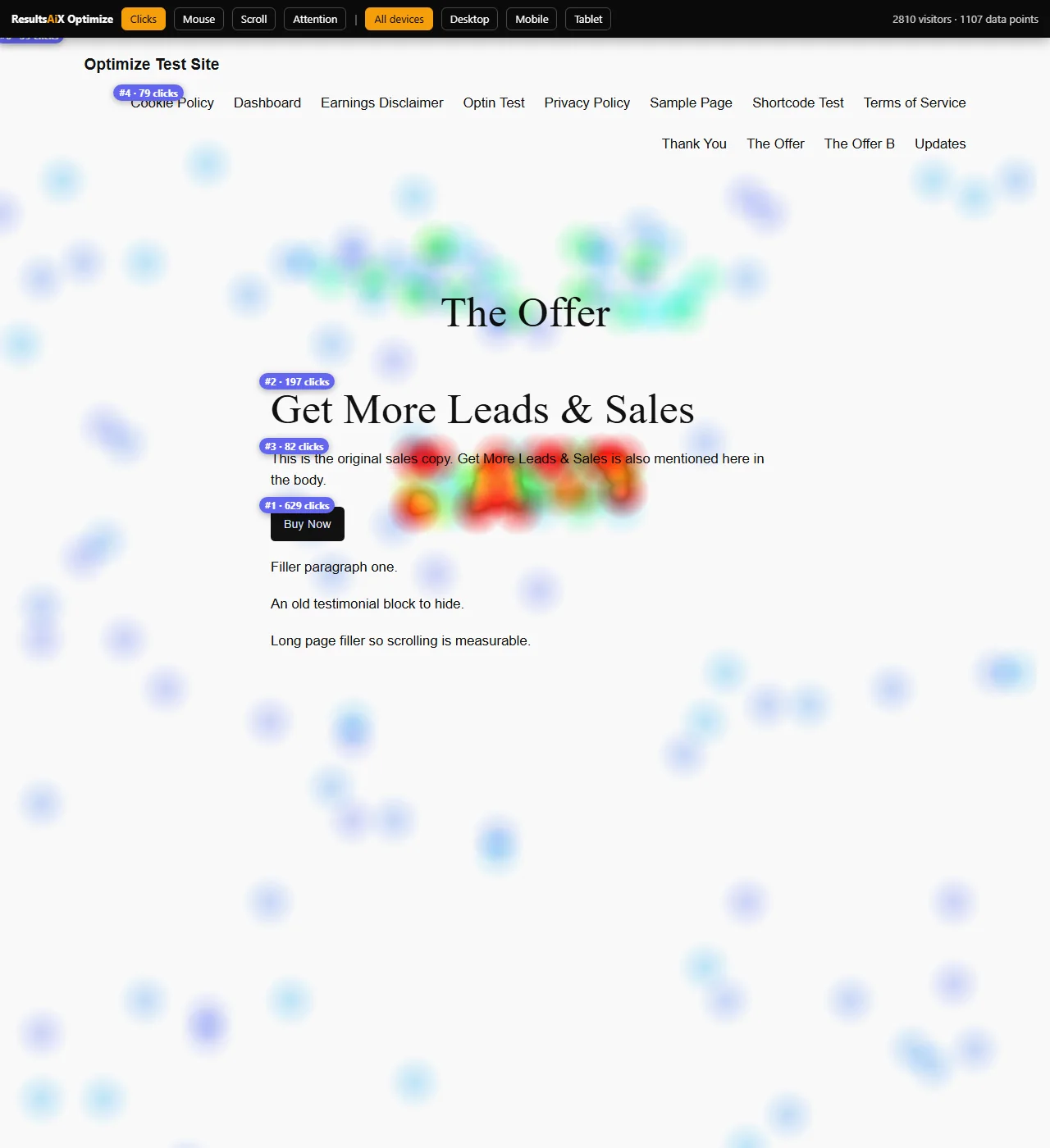
- Pick the page that makes you the most money.
- Write one bolder headline for it.
- Test it against the current one and let revenue decide.

Connect The Dots: Automation Without The Spaghetti
Once you have a few tools, the next leak appears: the gaps between them. A sale comes in on one platform, but the buyer never reaches your list. A lead fills in a form, but nobody tags them. A refund happens, but the person keeps their access. Every gap is either lost money or manual work.
Automation closes the gaps. When something happens in one place, the right thing happens everywhere else, on its own, every time.
Map The Flows That Matter
Do not automate everything. Automate the handful of flows that happen every day:
- New buyer: add to the buyer list, tag the product, start the onboarding emails, open their access.
- New lead: add to the right list with the right tags, based on where they came from.
- Webinar sign-up: into the reminder sequence, then into the right follow-up depending on whether they attended.
- Refund or cancel: tag it, stop the upsell emails, remove the access.
- Affiliate sale: record the partner, credit the sale, thank them.
Avoid The Spaghetti
The classic trap is a web of separate little automations in different places that nobody can remember. Keep all your bridges in one tool, name them clearly, and check one activity log when you want to know what happened. And avoid tools that charge per task, because a growing business runs more tasks every month.
Add Time To Your Automations
The best automations are not instant. Wait a day before the onboarding tip. Wait three days before the upgrade offer. Delays make automated follow-up feel human, because good follow-up has rhythm.
Every flow you automate is an hour you never spend again, and a customer who never falls through a crack.
- Write down what should happen when someone buys from you.
- Count how many of those steps you do by hand.
- Automate the first one this week.

Launch Like It Matters: Partners Make The Launch
A product launch is the fastest way to turn months of work into a spike of sales, new buyers and new subscribers. And the biggest launches are rarely powered by the creator's own list. They are powered by partners: affiliates who promote to their audiences in exchange for a commission.
The Pre-Launch Is The Launch
By launch day, the result is mostly decided. The work happens in the weeks before: recruiting partners, giving them everything they need, building excitement with your own list, and lining up the bonuses and contests that keep partners mailing.
Treat Partners Like Customers
- Know who actually sells: past results tell you who to invite first.
- Give back: promote for the people who promote for you, and keep track of who does.
- Make it easy: ready-made emails, graphics and a clear schedule.
- Report honestly: send each partner their numbers and a thank you after the launch.
One View Of Every Launch
When sales come in across more than one platform, the picture gets messy fast. Pull every sale, every partner and every product into one view, and you will see who drove the launch, what sold, and who to call first next time.
Launches are relationships with a date attached. Look after your partners and every launch gets easier than the last.
- List ten people who could promote your next product.
- Note which of them you have promoted for before.
- Send the first three a friendly, personal note this week.

Proof Sells: Turn Results Into Revenue
Nothing you say about your product is as convincing as one real customer saying it for you. Proof takes away the risk a buyer feels, answers objections before they are asked, and makes the decision feel safe.
Collect It Systematically
Most proof is never collected, because nobody asked at the right time. Ask when people are happiest: right after a win, after they finish onboarding, after a support question is solved. Make it easy: one click, a star rating, a sentence, or a short video recorded in the browser. A small thank-you gift for every review doubles the replies.
Show The Right Proof In The Right Place
- On the sales page: reviews that answer the main objection, next to the buy button.
- On the checkout and order pages: one short reassuring review.
- In emails: a customer story in place of a feature list.
- For partners: a wall of results that shows the product converts.
Specific Beats Glowing
"Great product!" persuades nobody. "I set it up in an evening and got my first 40 subscribers by Friday" persuades everybody. Ask questions that pull out specifics: what were you struggling with, what changed, what happened next?
Every happy customer is a salesperson you have not asked yet.
- Email your five happiest customers and ask one specific question.
- Put the best answer next to the buy button on your main sales page.
- Add a review request to your onboarding emails so it happens every time.

Look After Customers So They Stay And Buy Again
Getting a customer is expensive. Keeping one is cheap. The businesses that grow year after year are the ones whose customers stay, renew, upgrade and tell their friends. That comes down to two things: a great place to get what they paid for, and fast, friendly help when they need it.
A Members Area They Want To Come Back To
Put everything a customer owns in one place: downloads, trainings, courses and bonuses. Show progress, drip new lessons over time, and make the next step obvious. A clear members area cuts support questions in half and makes the next purchase natural.
Support That Answers Instantly
Most support questions have been asked before. Let AI answer those first, from your own help articles, with the sources shown, and hand the rest to you. Customers get an answer in seconds instead of hours, and you spend your time on the conversations that need a human.
Turn Help Into Sales
A good support conversation is also a sales conversation. When the system knows what someone owns, it can point them to the upgrade that solves their next problem. Helpful, not pushy, and it adds up.
Make it easy to buy, easier to use, and easiest to get help. Customers who feel looked after buy again.
- Write down the five questions customers ask you most.
- Turn each answer into a short help article.
- Link them from your members area and your contact page.
Own The Whole System With The ResultsAiX Bundle
Every plugin in every chapter you just read runs on your own WordPress site, shares the same customer data, and comes in one Bundle. No per-subscriber bills, no per-task meters, no per-attendee fees.

Get The Traffic And The List
- ResultsAiX EngagePopups, bars and slide-ins that capture visitors
- Free List Building Website96 done-for-you opt-in funnels
- Free Consumer Reports400 free report funnels
- ResultsAiX SurveysAI surveys that tag every answer
Email And Follow-Up
- ResultsAiX MailerUnlimited subscribers on your own site
- ResultsAiX EmailEvery email your business needs, in your voice
- WP SyncEvery sale and lead onto your list, automatically
Pages, Webinars And Media
- ResultsAiX FunnelsFull funnels from one sentence
- ResultsAiX ThemeBlog, sales pages and members area
- ResultsAiX WebinarsAutomated, recorded and live webinars
- ResultsAiX VideoYour cloned voice, finished videos
- ResultsAiX PodcastsPublic, members-only or private shows
Track, Test And Grow
- WP Conversion Tracker AIEvery click, lead and sale, with an AI analyst
- ResultsAiX OptimizeSplit tests, heatmaps and replays
- ResultsAiX PulseLive visitors and chat, Bundle only
Launch And Proof
- Launch Manager AIPartners, launches and JV sales in one view
- ResultsAiX TestimonialsCollect, verify and show real reviews
Customers And Support
- ResultsAiX MembershipCourses, members and payments
- ResultsAiX Support DeskAI answers first, you approve the rest
- And moreForms, Sign, Search, ADs, Consent, Accessibility, Publisher and every future plugin
AI features run on your own OpenAI, Claude or Gemini key, with no caps or markup added.

Put It Together: Your First 30, 60 And 90 Days
Fifteen chapters is a lot. You do not build it all at once, and you should not try. Here is the order that works: each month builds on the one before, and each step pays for the next.
See And Capture
Get your foundation in place and stop the leaks.
- Set up your home base and list every tool you pay for
- Put tracking links on every place you share links
- Build one lead magnet and its simple funnel
- Add capture campaigns to your busiest pages
Own And Systemize
Move your list home and build the follow-up once.
- Move your list to your own site and set up sending
- Write the welcome series and buyer branch
- Build your main funnel and your automated webinar
- Automate what happens when someone buys
Scale And Sell
Add reach, proof and partners on top of a system that works.
- Turn your best emails into videos and clips
- Start one split test on your top page
- Collect reviews and put them by the buy button
- Plan your first partner launch
Why This Order
Seeing comes first, because everything after it depends on knowing what works. Capture comes next, because it turns the traffic you already have into a list. Owning the list and automating follow-up turns that list into steady income. Only then do video, testing and launches make sense, because they multiply a system that already works, instead of hiding the holes in one that does not.
The Compounding Effect
Here is what happens when you follow the order. Every visitor is worth more, because capture turns more of them into subscribers. Every subscriber is worth more, because follow-up runs on its own. Every customer is worth more, because they are looked after and offered the next step at the right time. And every hour you spend is worth more, because AI drafted the work and you only made the decisions.
None of these improvements is dramatic on its own. Together they compound, month after month, into a business that grows while you sleep and still feels like yours. That is the whole point of this playbook: not to work harder, but to build the system once and let it carry you.
Go back to the first "Do This Today" box and do it now. One step today beats fifteen chapters of good intentions.
Get Every Tool In This Playbook, On Your Own Site
One Bundle, 25 plugins plus the Theme, 3 sites on every plugin and every future plugin included. Or keep the playbook and start with the free Hub today.
Questions first? Ask my support desk or ask my AI on the home page.